Musou Mode is the officer-story playlist in DYNASTY WARRIORS 3: Complete Edition Remastered: you fight Three Kingdoms battles, including new scenarios, and unlock officers by clearing special conditions. It sits beside Free Mode, Challenge Mode, VS Mode, Camp, and System. Offline split-screen is available in Musou Mode, Free Mode, and VS Mode. Weapon Fusion is a Camp action, not a battlefield button. This page maps those six playlists onto the remaster hubs so you can pick a mode before the first loading screen.
Musou Mode (無双モード)
Play each officer story through Three Kingdoms battles. New scenarios are part of this remaster pass, and new officers unlock when you hit the stated battle conditions. Split-screen is available.
Free Mode (フリーモード)
Pick any officer and scenario pair, including hypothetical runs on an officer's enemy force. Growth items carry across modes, so a Free Mode session still feeds the same officer you take back into Musou Mode.
Challenge Mode (チャレンジモード)
Scores enemies defeated, completion time, and combo. The three published rules are Endurance (斬合), Time Attack for 100 enemies (神速), and Assault as a three-minute combo (連撃).
VS Mode (VSモード)
Eight stages, including 3v3 Three Duels at Hulao Pass and 1v1 Naval Annihilation at Chibi, with special rules. Split-screen covers co-op or versus.
Camp (幕舎)
Prepare officers and bodyguards. Weapon Fusion consumes spare weapons to move elemental properties and skills onto another weapon.
System (システム)
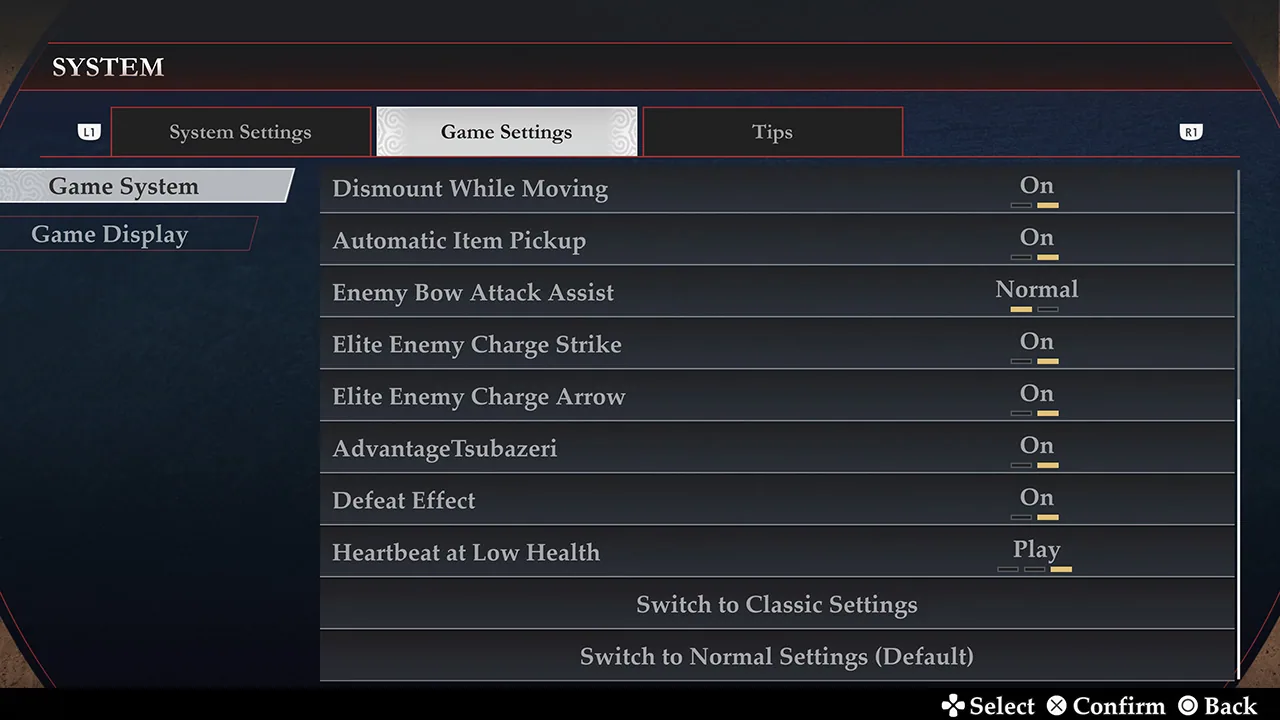
Normal and Classic Settings switch remaster features as presets closer to the original game or as the full new set.
Musou Mode as the story spine
Musou Mode is still the way you learn an officer's route through the Three Kingdoms. The remaster keeps that structure and adds new scenarios, which is why the official hub talks about unlocks through battle conditions rather than a single linear campaign flag. If you want the historical-force fantasy, stay on the officer's own story. If you want to break that fantasy, Free Mode is the explicit tool for enemy-force hypotheticals.
Officer unlocks are condition-based. The hub does not print the exact trigger list in a table, so no unofficial trigger list is added here. What you can plan around is that Musou Mode is where those conditions live, and that Camp growth carries into the next story battle. Pair this with the List of Officers if you are picking a first story: Xiahou Dun, Zhao Yun, Guan Yu, Zhen Ji, Zhou Yu, and Sun Shangxiang are the six you can already feel in the demo.
Free Mode and Challenge Mode
Free Mode removes the story lock on officer and scenario pairing. You can take a Shu officer onto a Wei stage or join an officer's enemy force. Inventory and growth items persist across modes, so grinding a weapon in Free Mode is not a separate save silo. That carryover is the reason Camp and Free Mode matter together: fusion materials you earn in one playlist still feed the officer you take into Musou Mode.
Challenge Mode is the score box. Endurance asks you to keep cutting; Time Attack asks for 100 enemies as fast as possible; Assault asks for a three-minute combo. Japanese labels 斬合, 神速, and 連撃 sit on the same three rules. Use Challenge Mode to test Evasion and Perfect Power Guard without spending a story life. It is not the place to unlock officers; that remains a Musou Mode job.
If you only have an hour, Challenge Mode is the honest short playlist: one rule, one score, no story lock. If you have an evening, Musou Mode plus a Free Mode detour is how you both unlock officers and test enemy-force hypotheticals. Camp sits between those sessions so Weapon Fusion can happen without pausing in the field.
VS Mode, Camp, and System
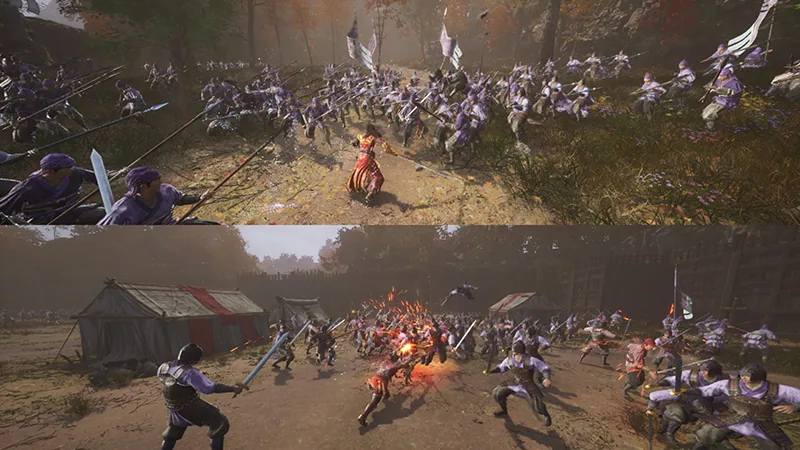
VS Mode publishes eight stages. The two named examples are Three Duels at Hulao Pass as a 3v3 and Naval Annihilation at Chibi as a 1v1. Split-screen covers both co-op and versus, matching Musou Mode and Free Mode. If you only have one controller, VS Mode is still a rules sandbox; if you have two, it is the couch playlist the remaster advertises.
Camp is the prep room. Bodyguards and officers share that space, and Weapon Fusion is the XL-era crafting step that consumes extra weapons as material. System is where you throw the remaster features to Normal or Classic. Classic is the honest way to ask for the 2001 timing; Normal is the way to keep Evasion and Perfect Power Guard in play. Weapon Fusion details those actions without pretending the hub printed frame data.
Named VS stages do more than flavor text. Three Duels at Hulao Pass is a 3v3, Naval Annihilation at Chibi is a 1v1, and six further stages sit behind those examples. Bring two controllers if you want the split-screen still from the hub to match your living room. One controller still lets you learn the stage rules before a guest arrives.
Picking a first mode on launch night
If you want stories and unlocks, start in Musou Mode and stay there until an officer you care about appears. If you want to throw Zhao Yun onto a Wei stage immediately, that is Free Mode, and your growth still carries. If you want to test Perfect Power Guard without spending a story continue, that is Challenge Mode. If a friend is on the couch, that is VS Mode or split-screen Musou Mode.
Camp is not a mode you 'finish'. Open it when you have spare weapons for fusion or when you want to touch XL bodyguards. System is the first menu to visit if the demo felt too busy: Classic Settings exist specifically so you can pull remaster actions back. None of these playlists require Deluxe. They all sit in the Complete Edition that Standard already is.
Japanese mode names 無双モード, フリーモード, チャレンジモード, VSモード, 幕舎, and システム match the English set one for one. If you play on a Japanese SKU, those are the labels on the same six playlists. Nothing in that list requires Deluxe, and nothing in that list is locked behind the Hulao Gate demo.